By 2026, digital marketing will no longer be driven by creativity alone. It will be shaped by a complex ecosystem of AI tools handling content creation, SEO, advertising, analytics, automation, and customer insights. Most marketers already rely on multiple AI platforms, but using more tools does not automatically lead to better results. Without clear oversight, AI can create fragmented workflows, inconsistent data, and wasted marketing spend.
This is where an AI Tools Manager becomes essential. Rather than simply adopting the latest software, this role focuses on selecting the right tools, integrating them into efficient workflows, and aligning AI-driven automation with real business goals. In 2026, digital marketers who can strategically manage AI tools will outperform those who use them blindly, achieving scalable growth, smarter decision-making, and a lasting competitive advantage.
Understanding the Role of an AI Tools Manager
An AI Tools Manager is a professional responsible for selecting, managing, and optimizing AI-powered platforms for marketing purposes. Their core mission is to maximize efficiency, ensure seamless integration, and generate measurable results from AI applications.
Key Responsibilities
- Tool Selection and Integration: Identifying AI tools suited for marketing needs such as CRM automation, content generation, and analytics.
- Workflow Optimization: Streamlining marketing processes by automating repetitive tasks like lead scoring, email personalization, and social media posting.
- Data Analysis and Insights: Interpreting AI-generated data to guide campaigns, improve targeting, and optimize conversion rates.
- Team Training and Support: Ensuring marketing teams are proficient in using AI tools effectively.
Read more about how to use an AI Tools Manager to improve your marketing workflow.
Why AI Tools Are Critical for Digital Marketing in 2026
The AI revolution in marketing is accelerating. Businesses that adopt AI early gain a competitive advantage, while those lagging behind risk falling out of the market.
Benefits of AI in Digital Marketing
- Efficiency and Productivity: AI automates repetitive tasks, freeing marketers to focus on strategy and creativity.
- Advanced Analytics: AI tools can analyze massive datasets to uncover patterns and trends human teams might miss.
- Personalization at Scale: From personalized email campaigns to tailored social media ads, AI allows highly targeted marketing.
- Cost Reduction: By optimizing campaigns and reducing manual labor, AI lowers overall marketing costs.
Example: A leading e-commerce brand integrated AI-powered customer segmentation and saw a 25% increase in conversion rates while reducing campaign costs by 15%.
Behind these benefits are strong data labelling and AI training processes, which ensure AI models are fed accurate, structured data before insights are applied to marketing decisions.
Challenges Digital Marketers Face Without an AI Tools Manager

Even with the best AI tools, poor management can limit ROI. Here’s what happens without an AI Tools Manager:
Common Issues
- Tool Overload: Too many tools create confusion, inefficiency, and redundant processes.
- Missed Opportunities: Without proper analysis, marketers can miss key insights from AI-generated data.
- Integration Problems: Poorly integrated tools result in inconsistent data and workflow bottlenecks.
- Skill Gaps: Marketing teams may underutilize AI features without expert guidance.
How an AI Tools Manager Boosts Campaign Performance
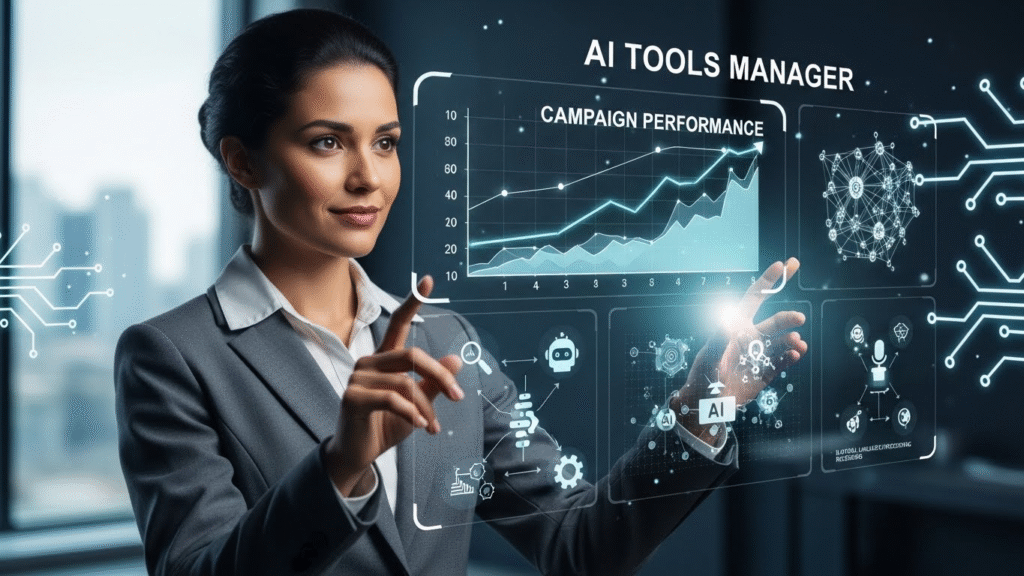
An AI Tools Manager doesn’t just handle tools—they drive strategic advantage.
Practical Impacts
- Optimized Marketing Funnels: AI insights can refine customer journeys for better engagement and conversion.
- Real-Time Decision Making: Managers can leverage AI data to adjust campaigns instantly.
- Enhanced Creativity: Automation of mundane tasks allows teams to focus on content creation and innovative strategies.
- Improved ROI Tracking: Centralized management ensures campaigns are measurable and results-oriented.
Key AI Tools Every Digital Marketer Should Leverage
Here are some AI tools that an AI Tools Manager can integrate to improve efficiency:
- Content Generation: Tools like Jasper, Copy.ai, and Write sonic can accelerate blog, email, and ad copy creation. Discover the best AI tools manager platforms that integrate these tools seamlessly.
- Customer Relationship Management (CRM): Salesforce Einstein or HubSpot AI help with predictive lead scoring and automated workflows.
- Data Analytics: Platforms like Google Analytics 4 with AI insights or Tableau with AI-driven visualization.
(Internal link: - Social Media Management: Tools like Hootsuite Insights or Lately.ai for content planning and engagement optimization.
Real-World Examples of AI Tools Management in Action

Example 1: E-Commerce Optimization
A mid-sized e-commerce company appointed an AI Tools Manager to oversee their AI stack. The manager:
- Integrated predictive analytics for inventory management.
- Automated email marketing based on customer behavior.
- Monitored real-time campaign performance using AI dashboards.
Result: 30% boost in sales within six months and a 40% reduction in manual reporting hours.
Example 2: Social Media Campaigns
A digital marketing agency struggled with client social media campaigns. Their AI Tools Manager:
- Implemented AI-driven content scheduling.
- Used sentiment analysis to adjust messaging.
- Tracked ROI with AI-powered analytics.
Outcome: Client engagement increased by 50% and ad spend efficiency improved significantly.
Skills and Qualifications of an AI Tools Manager
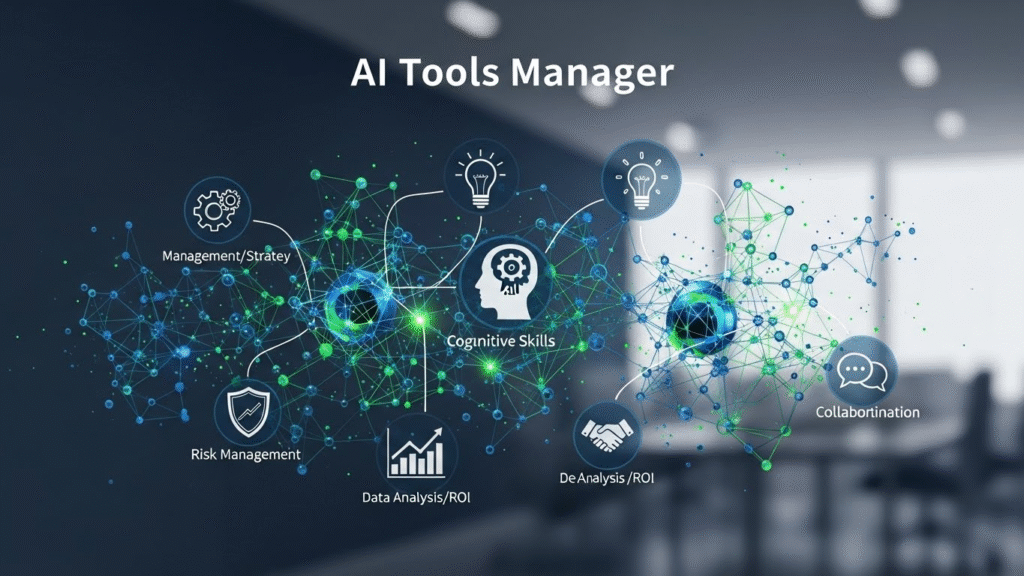
To maximize impact, an AI Tools Manager should possess:
- Technical Expertise: Knowledge of AI platforms, APIs, and integrations.
- Analytical Skills: Ability to interpret complex data and translate insights into actionable marketing strategies.
- Marketing Knowledge: Understanding of SEO, content marketing, paid ads, and email automation.
- Project Management: Coordinating cross-functional teams and ensuring timely delivery.
- Adaptability: Keeping up with the fast-evolving AI landscape.
Steps to Incorporate an AI Tools Manager in Your Marketing Team

- Assess Current Marketing Workflow
Assessing the current marketing workflow involves reviewing all existing processes, tools, and campaigns to identify what’s working and what’s not. It helps uncover inefficiencies, bottlenecks, or gaps in strategy that may be slowing growth. By understanding the current workflow, businesses can optimize resources, improve team collaboration, and set a stronger foundation for future marketing efforts. Start by exploring how AI Tools Managers can optimize workflows. - Audit Existing AI Tools
Every business or marketing team uses multiple AI tools, but they are not always utilized to their full potential. Auditing means evaluating which tools are actively used, which are redundant, and which are outdated. This process provides clarity and helps allocate resources more efficiently. - Hire or Upskill
Refers to making a strategic decision for business growth. You can either hire a qualified professional to deliver immediate expertise, or upskill your existing team to build long-term capabilities. The best approach depends on your budget, timelines, and future goals. - Set Clear KPIs
Means defining measurable and realistic goals that help track performance accurately. Clear KPIs allow teams to understand which activities are driving results and which areas need improvement. When KPIs are well-defined, decision-making becomes faster and strategies stay focused and results-driven. - Continuous Monitoring
Refers to the ongoing observation of systems, processes, or performance to detect issues, risks, or changes in real time. It helps organizations identify problems early and take timely corrective action. As a result, efficiency improves, downtime is reduced, and decision-making becomes more proactive and data-driven.
AI in Digital Marketing Beyond 2026

Beyond 2026, AI will move from being a supporting tool to a core decision-maker in digital marketing. Marketers will rely on AI to predict consumer intent, personalize experiences in real time, and automate complex strategies across multiple channels. Advanced AI models will analyze vast amounts of data from user behaviour to market trends to deliver hyper-personalized content, smarter ad targeting, and more accurate performance forecasting, helping brands stay ahead in highly competitive markets.
At the same time, the role of marketers will evolve from manual execution to strategic oversight. Ethical AI use, data privacy, and human creativity will become even more important as automation increases. Successful digital marketers will be those who can balance AI-driven insights with human judgment, storytelling, and brand values, ensuring technology enhances customer trust and long-term growth rather than replacing the human connection.
Conclusion
As digital marketing continues to evolve at lightning speed, the role of an AI Tools Manager becomes indispensable for businesses striving to stay competitive. With the sheer number of AI-powered platforms, automation tools, and data analytics solutions available in 2026, marketers risk inefficiency, wasted budgets, and missed opportunities without someone dedicated to managing, integrating, and optimizing these technologies. An AI Tools Manager ensures that each tool is not only used effectively but also aligned with the overall marketing strategy, delivering measurable results and maximizing ROI.
Moreover, having an AI Tools Manager empowers marketing teams to focus on creativity, strategy, and human-centric tasks while leveraging AI for repetitive and data-driven functions. From predictive analytics and personalized campaigns to automated content generation, this role bridges the gap between technology and marketing expertise. Ultimately, businesses that invest in an AI Tools Manager gain a competitive edge, streamline operations, and unlock the full potential of AI to drive growth, engagement, and innovation in 2026 and beyond.
FAQs
1.What is an AI Tools Manager?
An AI Tools Manager is a professional responsible for selecting, managing, and optimizing AI-powered marketing tools and platforms. They ensure that AI solutions are integrated efficiently into marketing strategies to improve automation, analytics, and campaign performance.
2.Why is an AI Tools Manager important in 2026?
With the rapid growth of AI tools, marketers risk inefficiency and wasted resources without proper management. An AI Tools Manager ensures tools are used effectively, aligned with business goals, and deliver measurable results, giving businesses a competitive edge.
3.What tasks does an AI Tools Manager handle?
They evaluate AI tools, implement automation solutions, analyze marketing data, optimize campaigns, train teams on new technologies, and maintain seamless integration between different platforms to maximize ROI.
4.Can small businesses benefit from an AI Tools Manager?
Absolutely. Even small teams can save time and resources by having someone manage AI tools, ensuring that automation, analytics, and content generation work efficiently without overcomplicating workflows.
5.How does an AI Tools Manager improve marketing ROI?
By strategically implementing and monitoring AI tools, they reduce manual work, prevent wasted spend on ineffective tools, and enhance targeting and personalization, leading to better engagement, conversions, and overall ROI.
6.Do marketing teams still need human creativity with AI Tools Managers?
Yes. The AI Tools Manager complements human creativity by handling repetitive, data-heavy tasks. This allows marketers to focus on strategy, storytelling, and creative campaigns while AI enhances efficiency and insights.
7.How do businesses choose the right AI Tools Manager?
Look for candidates with experience in digital marketing, a strong understanding of AI technologies, data analytics skills, and the ability to align technology with strategic business goals.