In 2026, the professional landscape is evolving at an unprecedented pace, driven largely by artificial intelligence (AI). AI has become an integral part of business workflows, from automating repetitive tasks to enhancing decision-making through predictive analytics. Professionals today manage a plethora of AI-powered applications ranging from project management tools and data analytics software to content creation assistants and marketing automation platforms.
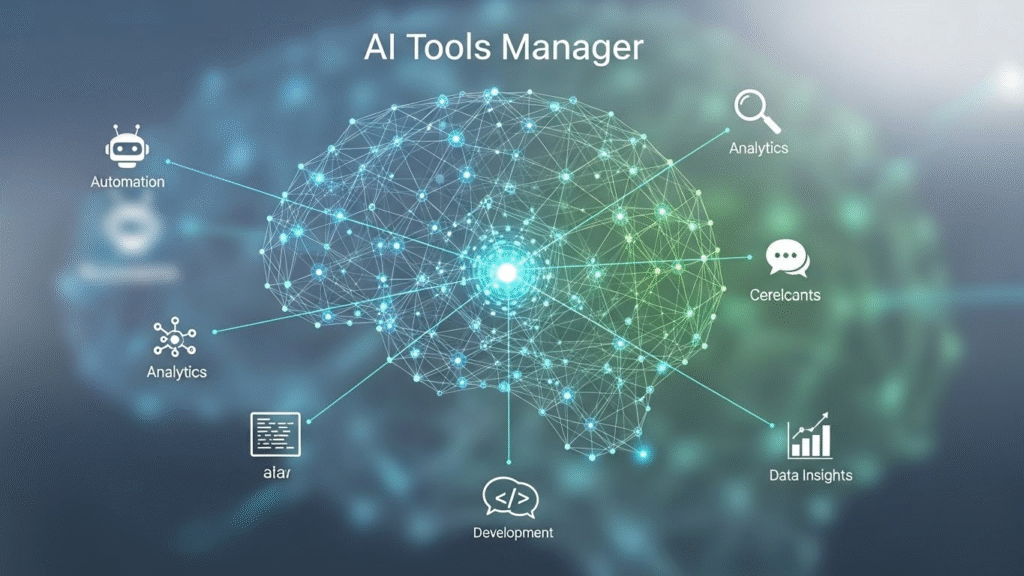
This rapid expansion of AI tools has created a new challenge: how can professionals efficiently manage multiple AI applications without losing productivity or control? This is where an AI Tools Manager comes in. An AI Tools Manager is a specialized platform or software solution that allows users to organize, monitor, and optimize all AI tools in one place. By providing a centralized dashboard, usage analytics, automation workflows, and integration capabilities, these managers help professionals maximize the benefits of AI while minimizing inefficiencies.
Whether you are a digital marketer, data scientist, or enterprise manager, using the right AI Tools Manager can save hours of manual work, improve collaboration, and provide actionable insights across teams.
Why Professionals Need an AI Tools Manager in 2026
Centralized Control
Professionals often use multiple AI tools across projects, making it hard to manage them individually. An AI Tools Manager brings all tools into a single interface. This saves time and reduces task-switching between platforms, especially when combined with AI-powered solutions like AI HR tools that require cross-team access.
Efficiency and Productivity
Manual tracking and repetitive tasks slow down workflows. AI Tools Managers automate processes and streamline operations. Teams can focus on strategic work while routine tasks run in the background
Data-Driven Decisions
Tracking AI tool performance manually is cumbersome and error-prone. AI Tools Managers provide analytics dashboards with real-time insights. This helps teams make informed, performance-based decisions quickly.
Collaboration
Teams often struggle to share AI workflows or updates efficiently. A manager allows secure, shared access across departments. This improves communication, coordination, and project execution, especially when paired with AI-powered content and presentation tools like advanced AI slide creators.
Scalability
As businesses grow, managing AI tools across multiple teams becomes complex. AI Tools Managers scale with your organization. They can handle multiple tools and users while maintaining performance and organization.
Top Features to Look for in an AI Tools Manager
When selecting an AI Tools Manager in 2026, professionals should prioritize tools that offer the following features:
| Feature | Description | Benefit |
|---|---|---|
| Centralized Dashboard | Unified interface to monitor all AI tools | Saves time and reduces task switching |
| Integration Capabilities | Connects with other software and platforms | Seamless workflow across multiple apps |
| Usage Analytics | Tracks tool usage and performance | Helps in data-driven decision-making |
| Automation Workflows | Automates repetitive tasks | Increases productivity and reduces errors |
| Security & Permissions | Provides access control and secure data management | Protects sensitive information |
| Team Collaboration | Shared access for team projects | Improves communication and workflow efficiency |
Categories of AI Tools Managers

AI Tools Managers can be categorized based on their target audience and use case.
1. Enterprise AI Managers
Designed for large businesses with multiple departments, these managers focus on scalability, security, and integration across enterprise software like Salesforce, Microsoft 365, or SAP. Enterprise teams leveraging platforms such as Salesforce Einstein AI agents will find these managers essential.
2. Small Business & Freelance Managers
Optimized for startups, solopreneurs, and freelancers, these tools are budget-friendly and focus on essential AI functions like automation, analytics, and project management.
3. Specialized AI Managers
Some tools specialize in particular AI domains, such as marketing automation, content creation, or data analysis. Choosing a specialized AI Tools Manager can maximize efficiency for niche tasks.
Best AI Tools Managers for Professionals in 2026
Here’s a comparison table of some of the most popular AI Tools Managers that professionals can consider in 2026:
| AI Tools Manager | Best For | Key Features | Pricing |
|---|---|---|---|
| AI Hub Pro | Enterprise Teams | Central dashboard, AI workflow automation, analytics | $49/user/month |
| SmartAI Manager | Small Businesses | Task automation, integrations, collaboration tools | $29/user/month |
| NeuralOps | Data Teams | Advanced AI analytics, project tracking, secure sharing | $59/user/month |
| FlowAI | Marketing & Content Teams | Content generation, AI campaign tracking, analytics | $35/user/month |
| AI Fusion | Freelancers & Solopreneurs | Simple dashboard, automation, reporting | $19/user/month |
How to Choose the Right AI Tools Manager

1. Team Requirements
Consider how many users will need access and their specific roles. Ensure the manager supports collaboration for teams. The right tool aligns with your team’s size and workflow needs.
2. Tool Integrations
Check if the manager integrates seamlessly with your existing software stack. Compatibility with other apps ensures smooth workflows. This reduces manual data transfers and improves efficiency.
3. Budget
Evaluate pricing plans based on features and team size. Tools like free vs paid AI tools can help you understand what to invest in and what to skip.
4. Security & Compliance
Ensure the manager follows data privacy regulations and provides secure access controls. Protect sensitive information from unauthorized use. This is crucial for enterprise and regulated environments.
5. Ease of Use
The platform should have an intuitive interface and manageable learning curve. Teams can adopt it quickly without extensive training. A user-friendly tool increases productivity and reduces errors.
Benefits of Using an AI Tools Manager
Improved Productivity
Automates repetitive tasks and workflows, freeing up professionals to focus on strategic work. This reduces errors and accelerates project completion. Over time, teams can accomplish more in less time.
Enhanced Collaboration
Centralized dashboards allow team members to share AI tools, workflows, and insights easily. Communication improves as everyone works with the same data. Teams can coordinate projects seamlessly across departments.
Better Insights
Usage analytics and performance tracking provide clear visibility into how AI tools are utilized. Managers can make informed decisions based on data trends. This leads to optimized workflows and improved ROI.
Cost Efficiency
Consolidating AI tools under one manager reduces redundant subscriptions and unnecessary software costs. It ensures resources are allocated to tools that actually deliver value. Businesses save money while maximizing productivity.
Future-Ready Workflows
AI Tools Managers adapt to new AI applications and technologies as they emerge. This keeps teams up-to-date with the latest innovations. Professionals stay competitive in an AI-driven work environment.
Implementation Tips for Maximum Efficiency

1. Audit Current AI Tools
Start by listing all AI applications your team currently uses. Identify overlaps, redundancies, and underutilized tools. This helps in streamlining workflows and choosing the right AI Tools Manager.
2. Map Workflows
Analyze how tasks are performed and determine which processes can be automated. Creating a clear workflow map ensures the manager enhances efficiency instead of adding complexity.
3. Set Access Levels
Assign proper permissions to team members based on their roles. Controlled access maintains security and ensures everyone has the right tools without confusion.
4. Monitor Usage Analytics
Regularly track how AI tools are being used and measure performance. Usage analytics reveal bottlenecks, inefficiencies, and opportunities for optimization.
5. Train Your Team
Provide structured training sessions to help your team adapt to the AI Tools Manager. Well-trained users can leverage features fully, boosting productivity and ROI.
Challenges and How to Overcome Them

Even with a powerful AI Tools Manager, professionals may face integration and adaptation challenges. Some AI tools may not seamlessly connect with the manager, causing workflow disruptions. Additionally, teams often encounter a learning curve when adopting new software, which can temporarily reduce productivity.
To overcome these issues, choose a manager that supports open APIs and wide integration options, ensuring compatibility with existing tools. Provide phased training for team members and prioritize essential features to optimize costs. Regularly monitoring usage analytics also helps identify bottlenecks and improve overall efficiency.
Future Trends in AI Tools Management

As AI continues to evolve, AI Tools Managers will become smarter and more intuitive. Future platforms will use AI-powered recommendations to suggest optimal workflows based on usage patterns. Predictive analytics will help anticipate bottlenecks, ensuring smoother operations similar to how ChatGPT and advanced conversational AI optimize user interactions.
Additionally, cross-platform integration will become seamless, allowing professionals to connect multiple AI applications across cloud services and business software effortlessly. Security will also advance, with AI-driven threat detection and automated compliance reporting ensuring that sensitive data remains protected. These trends indicate that AI Tools Managers will not just organize tools they will actively guide teams toward smarter, more efficient workflows.
Conclusion
The professional world in 2026 is inseparable from AI, and managing multiple AI tools efficiently is crucial for productivity and growth. AI Tools Managers offer a centralized, secure, and scalable solution for professionals to harness the full potential of AI. By selecting the right manager, auditing workflows, and training teams, organizations can achieve improved collaboration, better insights, and a competitive edge.
Whether you are a freelancer, small business owner, or enterprise professional, adopting an AI Tools Manager is no longer optional it’s a strategic necessity for thriving in an AI-driven future.
FAQs
1. What is an AI tools manager?
An AI tools manager is a software platform or system that helps professionals organize, manage, and optimize multiple AI tools in one place. It streamlines workflows, tracks tool usage, and ensures teams use AI resources efficiently.
2. Why do professionals need an AI tools manager in 2026?
With the rapid growth of AI tools, managing multiple applications manually is inefficient and prone to errors. An AI tools manager centralizes tool access, monitors performance, and improves collaboration, saving time and boosting productivity.
3. What features should the best AI tools manager have?
Top features include tool integration, usage analytics, automation workflows, team collaboration, centralized dashboards, security compliance, and AI-powered suggestions for optimizing performance.
4. How can an AI tools manager improve productivity?
By centralizing tools, automating repetitive tasks, and providing actionable insights, an AI tools manager reduces manual effort, prevents tool overlap, and helps professionals focus on high-value work.
5. Can AI tools managers work with multiple types of AI software?
Yes. The best AI tools managers support integration with a wide variety of AI tools, including content generation, data analysis, image/video editing, and workflow automation, making them versatile for different industries.
6. Are AI tools managers suitable for small teams or freelancers?
Absolutely. Many AI tools managers are scalable, allowing small teams and freelancers to efficiently manage multiple AI tools without investing in complex IT infrastructure.
7. How do I choose the right AI tools manager?
Consider your workflow needs, team size, tool integrations, pricing, user interface, and support. Reviews and trial periods can also help identify the solution that best fits your professional requirements.
8. What trends are shaping AI tools management in 2026?
AI tools managers are increasingly using predictive analytics, generative AI suggestions, automated workflows, and enhanced collaboration features to make AI tool usage smarter and more intuitive.